

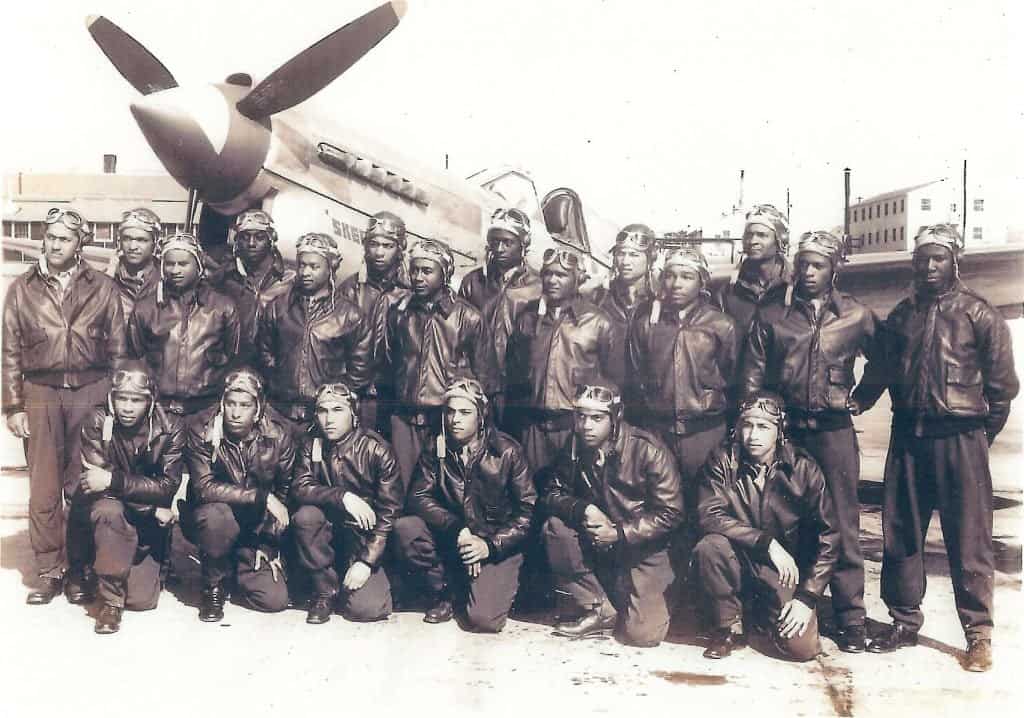
When the United States involvement in World War II became inevitable in the late 1930s, President Franklin Roosevelt had no choice but to expand inclusion in all branches of the military, including what was then the Army Air Corps. After successful lobbying efforts led by Civil Rights organizations like the NAACP, and just over a decade after Charles Lindbergh’s infamous cross-Atlantic flight aboard the Spirit of St. Louis, civilian pilot training began to integrate Black Americans interested in pursuing aviation. The fact was that the country’s pilot base would need to grow significantly to keep up with the combat demand that awaited the United States in the War in Europe.
With segregation laws still in effect throughout the country, Black American airmen were sent to the Tuskegee Army Airfield in Tuskegee, Alabama, to begin training as pilots, navigators, bombardiers, mechanics, and more. The Tuskegee Airmen entered the war in 1943 in North Africa and Sicily and were often assigned to second-hand aircraft that were slower in performance and more difficult to maneuver. Still, they played a pivotal role in the allied victory in Europe having flown more than 15,000 missions and earning more than 150 Distinguished Flying Crosses in just two years in active combat.
There was no looking back.
The success of the Tuskegee Airmen in World War II opened the door for continued integration in aviation. Their demonstrated courage and resiliency as they bore the brunt of systemic racism opened the door for future Black Americans to be able to pursue their dreams of a life in the skies.
The Commemorative Air Force Museum at Camarillo Airport has a portion of their permanent exhibit honoring the Tuskegee Airmen, including former Camarillo resident Richard T. Lee. Though most of the Tuskegee Airmen are now gone, their legacies live on through their families and through the opportunities available to all who dream of flying. As we prepare to welcome a new month, may we take the time to acknowledge every month the contributions of those who have paved the way and have empowered new generations of pilots to take aviation to new heights.
Photo courtesy of the CAF Red Tail Squadron